
Rotted Fascia Ends: Why They Rot First and How We Fix Them
If you've ever walked around your house and noticed the corners of your roofline looking soft, flaky, or swollen, you've probably found one of the most common exterior repairs in the Pacific Northwest: rotted fascia ends.
The fascia is the board that caps the ends of your rafters — it's what your gutters hang from. And the very ends of those boards, right at the corners, are where rot almost always starts first. Here's why, how to spot it, and how the repair works.
Why the Ends Go First
The primary reason fascia boards rot at the ends is a combination of water exposure and poor roofing details. The end of a board exposes end grain, which wicks water like a straw. Every time rain hits that corner — gutter splash-back, runoff from the drip edge, or wind-driven rain off the eave — the end of the fascia soaks it in.
Roofing practices play a major role. Many roofers neglect to install flashing above the fascia ends. Even when flashing is installed, it is often not folded down properly or lacks a piece of roofing that extends over the end, leaving the wood vulnerable to repeated wetting.
The corners also have miter joints, which create seams that rely on caulk. Caulk inevitably fails. Once the joint cracks or pulls away, water slips behind the paint and into the wood. From there, the deterioration accelerates: the wood softens, the paint blisters, and by the time the damage is visible from the ground, the rot has usually spread much further than it appears.
Here in Snohomish County, we get months of wet weather and very little drying time. Moss holds moisture against the boards, gutters clog with fir needles, and overflowing gutters dump water exactly where the fascia ends are most vulnerable. It's not a defect — it's just what wood does in this climate without upkeep.
How to Tell Your Fascia Ends Are Rotting
One caution: rot often goes further than the visible damage. If the end looks bad, the next few inches of board are usually soft too. We always check back past what's obvious.
- Paint failing at the corners first. Bubbling, peeling, or flaking paint right where the roofline turns a corner is almost always water behind the wood, not a paint problem.
- The poke test. Press a screwdriver or your finger into the board end. Solid wood resists. Rotten wood is soft, spongy, or crumbles.
- Gutters sagging or pulling away. Gutters are fastened to the fascia. When the wood rots, the screws lose their grip and the gutter starts to drift away from the house — usually at the corners first.
- Discoloration and flaking. Dark staining or wood coming off in flakes near a corner joint means the damage is already past the surface.
What Happens If You Leave It
A rotten fascia end is never just a cosmetic problem. Leave it long enough and the rot spreads inward — into the rafter tails behind the fascia and the soffit. At that point a small splice turns into structural carpentry.
Worse, the gutters are attached to that board. When the fascia fails, the gutter pulls loose, and then instead of rain being carried away from your house, it's pouring straight down by your foundation — which is how a fascia problem becomes a foundation and siding problem.
It's also an open door for pests. Soft, damp wood at the roofline is exactly where carpenter ants and termites and other insects like to move in.
The repair gets more expensive the longer it waits. Catching it at the fascia end stage is one of the cheapest exterior repairs there is.
How the Repair Actually Works
A fascia end repair isn't complicated, but it has to be done right or the rot just comes back. Here's the process:
- Cut back to solid wood. We remove the rotted section and keep cutting until we hit firm, healthy wood — usually a foot or more past the visible damage.
- Splice in a new board. The replacement section is cut to match the existing board's width and thickness, with a clean joint that lands on solid material.
- Seal every cut. This is the step that matters most. Every fresh cut — especially the end grain — gets primed and/or sealed with caulk. Installing bare wood with unsealed end grain is how the next repair gets scheduled.
- Fasten and caulk. The splice is set with proper fasteners, the joint is caulked with exterior-grade caulk, and the transition is smoothed.
- Prime and paint the full run. The new section gets two full coats of paint, feathered into the existing boards so the repair disappears. After the first coat the patches often still stand out, which is why a second coat is almost always needed.
- Check the gutter corner. While we're up there, we check the gutter hangers and the corner seal. If the gutter was the cause, it gets fixed too — otherwise you're back in a few years.
Matching the Old Board to the New
Homeowners always ask: will I be able to see where the new piece went in?
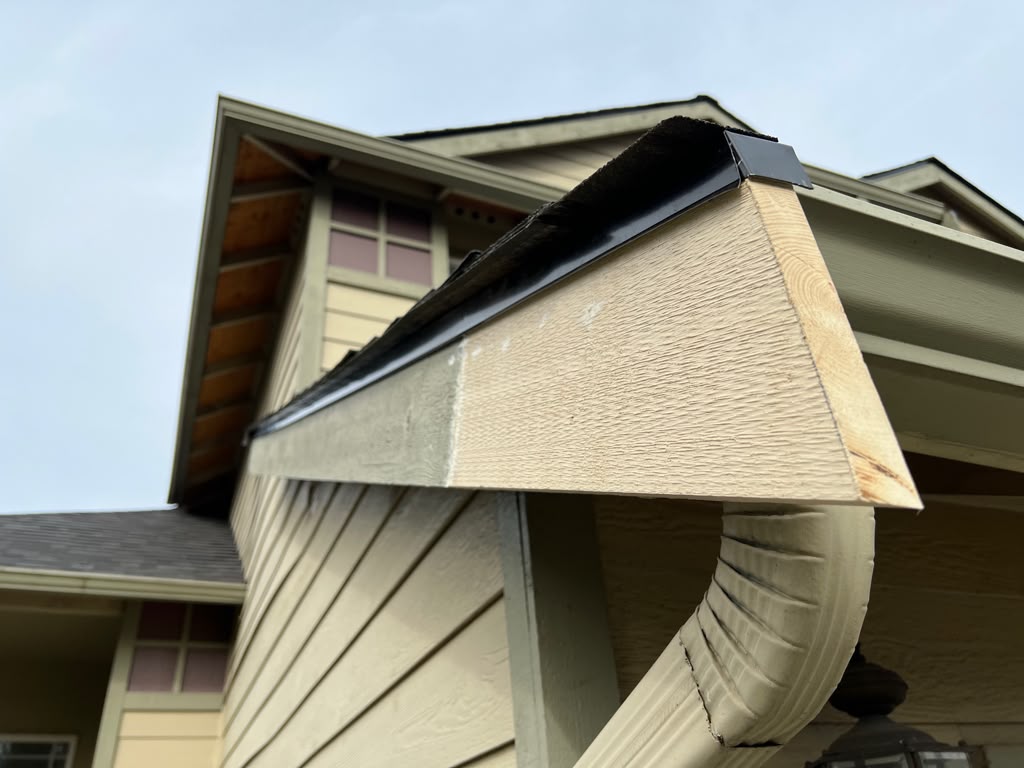
After it's primed and painted, no. We match the board width and profile to what's already there, and texture where it counts. Fresh wood looks bright and unfinished next to weathered paint — the photos on this page show exactly that: a fresh fascia splice before paint. Once the primer and topcoat go on, the joint blends in and you'd never know where old stops and new begins.
If the existing fascia is overdue for paint overall, we'll tell you straight. Sometimes it makes more sense to wrap the repair into a larger paint touch-up rather than painting one section and having it look fresh against tired paint elsewhere.
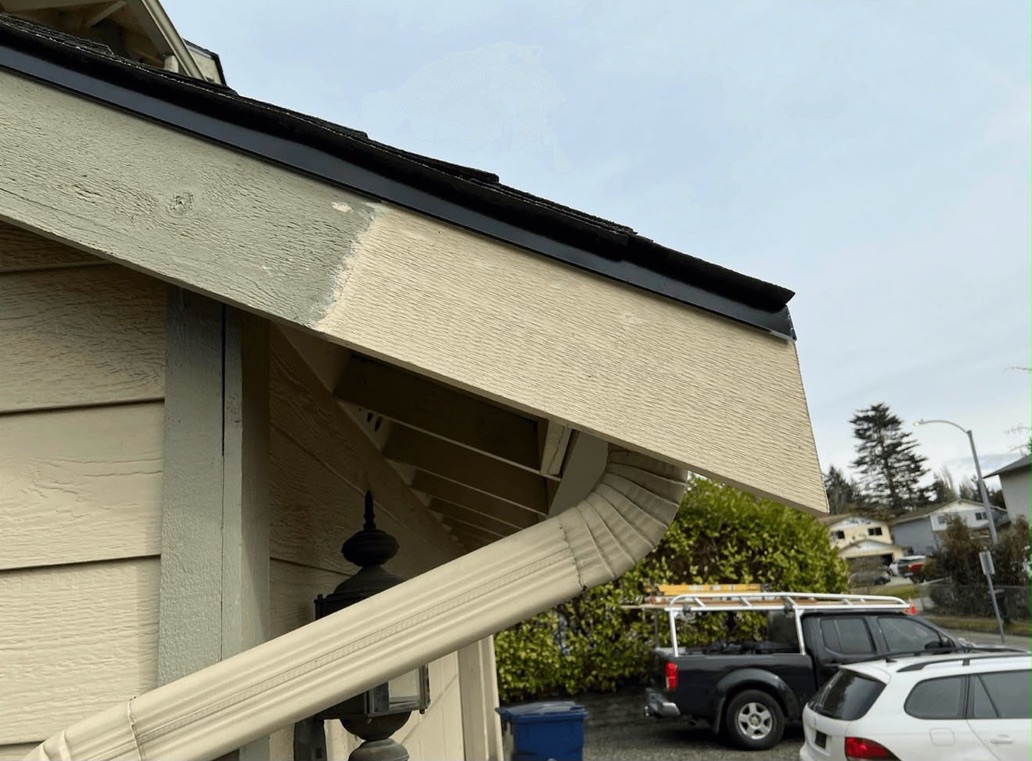
Fresh cedar fascia splice installed with clean miter and new flashing before primer and paint.
Fascia end cut back to solid wood and spliced with matching profile, sealed and ready for finish coat.
Keeping It From Happening Again
- Keep your gutters clear. Overflowing gutters are the number one cause of fascia end rot. In the PNW, that means cleaning them before the fall rains and again after.
- Touch up caulk at the joints. Every couple of years, check the corner joints and re-caulk where it's cracking. It's a five-minute job that prevents a repair.
- Don't let paint fail. Paint is the waterproofing. Once it starts peeling on the fascia, water is getting in — don't wait for a full repaint cycle.
- Make sure the drip edge works. The metal drip edge should kick water into the gutter, not behind the fascia. If it's bent or missing at a corner, that's a fix worth making.
- Trim branches back. Branches rubbing the roofline wear paint off and hold moisture against the wood.
Frequently Asked Questions
Can I just caulk or paint over rotted fascia?
No — and this is the mistake we see most. Caulk and paint seal the rot in, which lets it keep spreading under a fresh-looking surface. Rot has to be cut out. There's no product that reverses it.
Do you have to replace the whole fascia board?
Usually not. If the rot is limited to the ends, a splice is the right repair — faster, cheaper, and just as durable when it's sealed properly. We replace full boards when the damage runs deep or the board is failing in multiple spots.
Will the repair rot again?
Not if the water problem is fixed at the same time. A properly sealed splice lasts for years. What brings rot back is the same thing that caused it: water getting into unsealed wood. That's why we address gutters, caulk, and drip edge as part of the job.
How do I know if it's rot and not just peeling paint?
The poke test is the simplest check — press into the wood. But if you're not sure, that's what a free estimate is for. We'd rather take a look and tell you it's fine than have you discover it after it's spread.
Is this urgent, or can it wait until spring?
If it's fall or winter, don't wait. Every rainy month is more water into the wood, and in this climate that's months on end. A fascia end repair is a small job now and a big one later.
Ready to Get It Fixed?
If your fascia corners are soft, flaking, or your gutters are pulling loose, it's a quick look and a straightforward repair. Call (425) 535-3425 or request your free in-home estimate — Ilya and the team at Advanced Home Repairs will take a look, tell you exactly what it needs, and get it sealed up before the next round of rain.
Have Questions About Your Upcoming Project?
Tell us about your project and our team will coordinate an on-site consultation and free estimate.